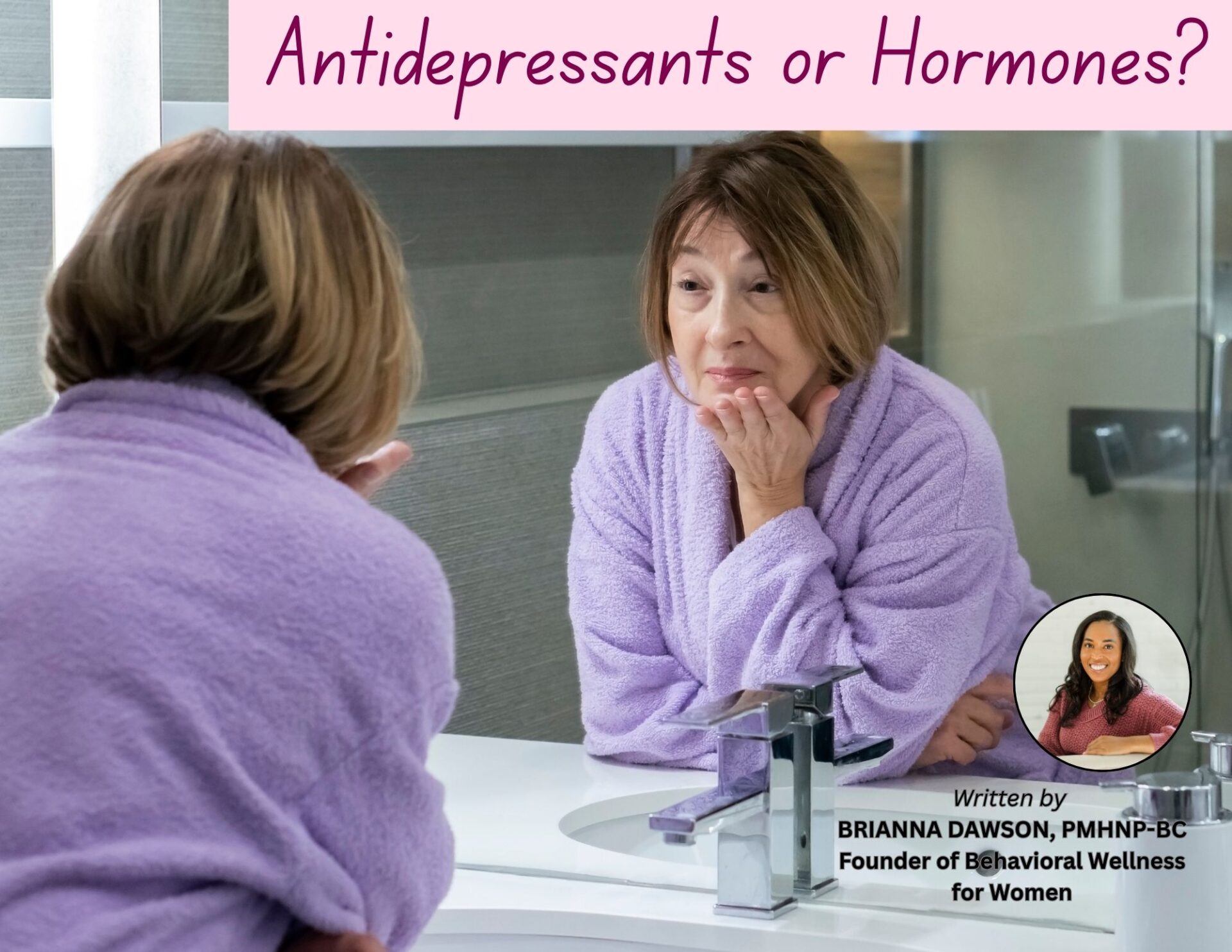
Antidepressants or Hormones?Understanding Mood Treatment Options During Perimenopause
By Brianna Dawson, PMHNP-BC | Psychiatric Nurse Practitioner & Founder of Behavioral Wellness for Women
Many women entering their 40s or early 50s notice changes in their mood that feel unfamiliar. You may find yourself feeling more anxious than usual, more irritable, emotionally sensitive, or suddenly struggling with sleep. Some women describe it as feeling like their emotional resilience has shifted overnight.
When these changes appear, one of the most common questions women ask is:
“Is this hormonal, or do I need an antidepressant?”
The reality is that the answer is often more nuanced than choosing one or the other. Understanding how hormonal changes affect the brain can help clarify why mood symptoms appear during perimenopause and what treatment options may be most helpful.
Why Mood Changes Happen During Perimenopause
Perimenopause is the transition leading up to menopause, and it can begin several years before periods stop completely. During this time, estrogen and progesterone levels fluctuate significantly.
These hormones do far more than regulate the menstrual cycle. They also influence several neurotransmitters involved in mood, including serotonin, dopamine, and GABA.
As hormone levels shift, some women experience:
- Increased anxiety
- Irritability or mood swings
- Sleep disruption
- Low mood or loss of motivation
- Brain fog or difficulty concentrating
- Heightened stress sensitivity
For women who have previously experienced postpartum depression, PMDD, or anxiety disorders, these changes may feel especially noticeable.
The Brain–Hormone Connection
Estrogen plays an important role in serotonin regulation, which is one reason some women experience mood symptoms during hormonal transitions.
When estrogen levels fluctuate, it can temporarily disrupt the brain systems involved in emotional regulation and stress response. This doesn’t mean the symptoms are “just hormones,” but it does mean hormonal changes can significantly influence how the brain processes stress, mood, and sleep.
Because of this connection, treatment during perimenopause sometimes involves addressing both hormonal factors and mental health symptoms.
Women experiencing persistent anxiety, depression, irritability, or sleep disruption may benefit from working with a provider experienced in women’s mental health and reproductive psychiatry.
Lifestyle Supports Still Matter
Lifestyle strategies can play an important role in supporting mood during perimenopause. Many women benefit from consistent strength training, regular movement, prioritizing sleep, and stress management practices.
However, while these strategies can improve overall well-being, they do not always fully address mood symptoms driven by hormonal fluctuations or changes in brain chemistry.
When symptoms persist despite healthy lifestyle habits, it may be worth exploring whether additional support is needed.
When Hormone Therapy May Be Helpful
For some women, hormone replacement therapy (HRT) can significantly improve mood symptoms during perimenopause.
Estrogen therapy may help stabilize the hormonal fluctuations that contribute to:
- mood swings
- irritability
- sleep disruption
- emotional sensitivity
This approach is often managed by a gynecologist or menopause specialist, and for some women it can make a meaningful difference in overall emotional well-being.
However, hormone therapy does not treat all forms of depression or anxiety, and not every woman is a candidate for HRT.
When Antidepressants May Be the Right Option
Antidepressant medications can also play an important role in treating mood symptoms during perimenopause.
Selective serotonin reuptake inhibitors (SSRIs) and similar medications support the brain’s serotonin system, which may help reduce:
- persistent anxiety
- depressive symptoms
- intrusive thoughts
- irritability
- sleep disruption
For women whose symptoms are significantly affecting daily functioning, work performance, relationships, or overall quality of life, medication can provide meaningful relief.
In some cases, antidepressants may also be used alongside hormone therapy, depending on the underlying drivers of the symptoms.
A More Comprehensive Way to Think About Mood Treatment
Rather than thinking of treatment as choosing between hormones or antidepressants, many women benefit from a more comprehensive approach that considers several factors, including:
- hormonal changes
- stress physiology and cortisol patterns
- sleep quality
- life transitions
- personal mental health history
- nutritional and metabolic factors
Understanding these pieces can help clarify what is actually driving symptoms and guide more targeted treatment.
When to Seek Professional Support
Mood changes during perimenopause are common, but they should not be dismissed or minimized. If anxiety, irritability, low mood, or sleep disruption are interfering with daily life or overall well-being, speaking with a qualified mental health provider can help.
A psychiatric evaluation can help clarify whether symptoms are primarily related to hormonal shifts, a mood or anxiety disorder, or a combination of factors.
Brianna Dawson is a board-certified psychiatric nurse practitioner specializing in women’s mental health across the reproductive lifespan. Her work focuses on the intersection of hormones, stress physiology, and mood — helping women understand whether symptoms like anxiety, irritability, low motivation, or sleep disruption are related to perimenopause, hormonal shifts, or underlying mood disorders.
Through a holistic approach that may include comprehensive psychiatric evaluation, hormone-informed treatment, lab testing, and personalized care planning, Brianna helps women gain clarity around what’s driving their symptoms and identify effective treatment options. Her services include psychiatric evaluations, medication management, and support for women navigating mood changes during hormonal transitions such as perimenopause across Pennsylvania, New Jersey, Delaware, and Florida.
Learn more about her approach at www.behavioralwellnessforwomen.com