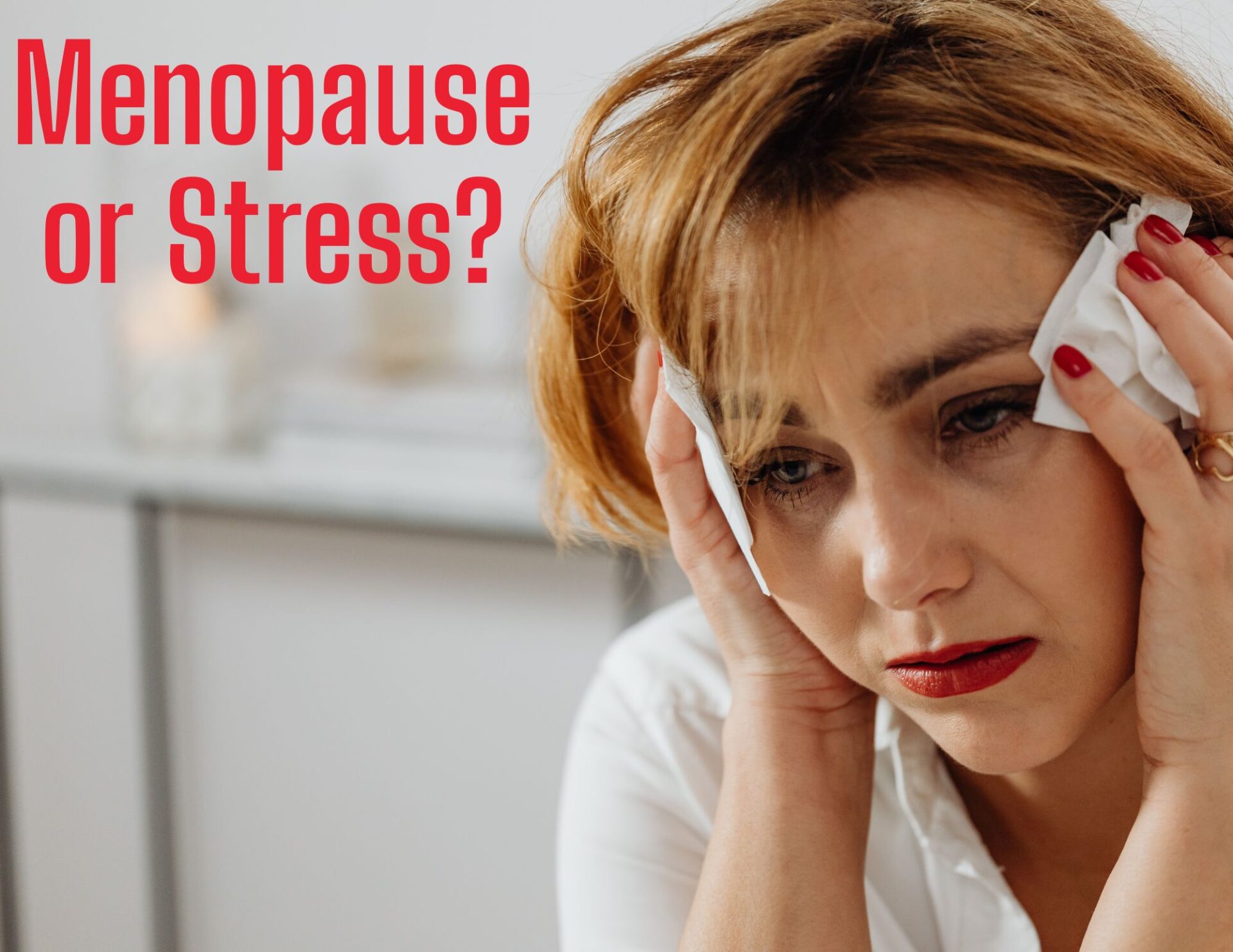
Is It Menopause or Is It Stress? (Honestly, It Might Be Both)
It’s 2pm on a Tuesday.
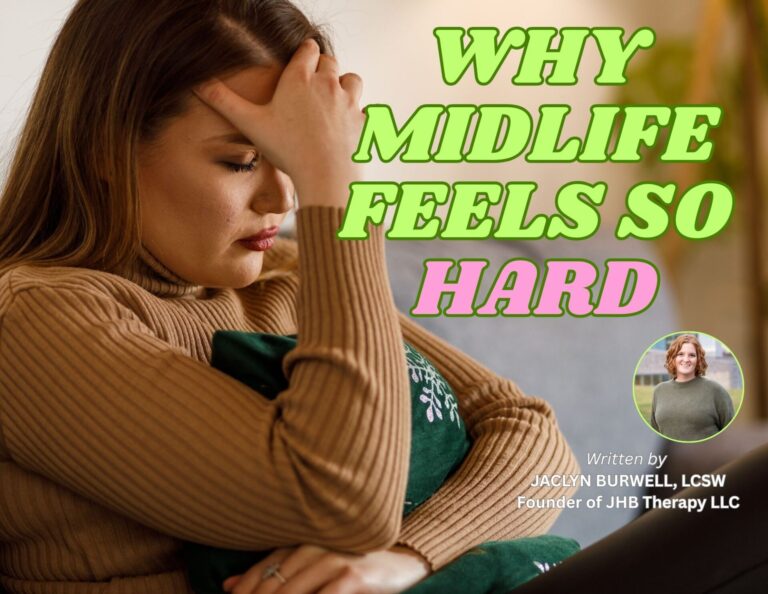
You’re exhausted but you can’t focus. You snapped at someone you love this morning over something small and you still feel bad about it. Your brain feels like it’s running thru mud. You’re either too hot or too tired or both, and you genuinely cannot tell if you’re falling apart or if this is just… Tuesday. (yes, I’m talking about my day)
Sound familiar, too? 🙄
If you’ve been trying to figure out whether what you’re feeling is menopause or stress, I have news for you: it might genuinely be both. And here’s the thing — they’re not separate conversations. They’re deeply, biologically connected.
🧠 First, Let’s Talk About What Stress Actually Does to Your Body
When you’re stressed, your body releases cortisol. That’s your primary stress hormone, and in small doses it’s actually helpful — it gets you moving, keeps you alert, helps you respond to demands.
But when stress is chronic — the low-grade, never-fully-goes-away kind that most of us are living with — cortisol stays elevated. And elevated cortisol over time disrupts sleep, increases inflammation, affects blood sugar, contributes to belly fat, tanks your mood, and messes with your ability to think clearly.
Read THAT again. Disrupted sleep. Belly fat. Mood changes. Brain fog. Sound like anything else you’ve been dealing with lately? 😐
🔥 Here’s Where Menopause Comes In
During perimenopause and menopause, estrogen and progesterone decline. And those two hormones don’t just affect your reproductive system — they play a huge role in regulating your stress response, your mood, your sleep quality, and your brain function.
Progesterone in particular has a naturally calming effect on the nervous system. It works similarly to anti-anxiety compounds in the brain. So when progesterone drops — which happens early in perimenopause — many women notice they feel more anxious, more reactive, more easily overwhelmed. Not because something is wrong with them. Because their natural buffer is gone.
At the same time, declining estrogen affects serotonin and dopamine — your feel-good neurotransmitters. Less estrogen can mean lower mood, less resilience, and a harder time bouncing back from the inevitable stressors of daily life.
So you’ve got hormonal changes making you more stress-sensitive at the exact same time life is probably asking a lot of you. That’s not a coincidence. It’s just really terrible timing. 🙃
🔄 The Feedback Loop Nobody Warns You About
Here’s where it gets really important to understand: stress and menopause symptoms can amplify each other.
High cortisol can worsen hot flashes. Disrupted sleep from night sweats increases cortisol. Higher cortisol makes it harder to sleep. Harder sleep makes everything — mood, focus, energy, patience — worse. Which increases stress. Which increases cortisol. 😣
It’s a loop. And once you’re in it, it can feel impossible to figure out where it started.
This is why you cannot separate your stress from your symptoms. They are talking to each other constantly. Addressing one without the other is like trying to bail out a boat without plugging the hole.
🤔 So How Do You Actually Tell Them Apart?
Honestly? Sometimes you can’t — and that’s okay. But here are some clues that can help you figure out what’s driving what:
It might be leaning more toward menopause if:
- You’re experiencing physical symptoms like hot flashes, night sweats, or irregular periods
- Symptoms showed up or got significantly worse around your mid-to-late 40s
- You feel anxious or low even during relatively calm periods of life
It might be leaning more toward stress if:
- Symptoms get noticeably worse during high-pressure periods and ease up when life calms down
- You’re sleeping poorly but it’s clearly tied to racing thoughts or anxiety, not hot flashes
- You feel significantly better after a vacation, a slow weekend, or a genuinely restful stretch
But again — most of the time it’s both. And that’s actually useful information, because it means addressing stress isn’t optional. It’s part of managing your symptoms.
💪 What Actually Helps (For Both)
The good news is that a lot of the same things that support your body through menopause also help regulate your stress response. They work together.
Strength training
Resistance training helps regulate cortisol, improves mood through endorphin release, supports bone density, and builds the kind of physical resilience that makes everything else easier. Even 2-3 sessions a week makes a measurable difference.
Prioritizing sleep like it’s your job
I know — easier said than done when night sweats are involved. But sleep hygiene matters more than ever in midlife. Cool room, consistent bedtime, no screens before bed, limiting alcohol. These aren’t suggestions. They’re interventions.
Regulating your nervous system daily
This doesn’t mean meditating for an hour. It means building small moments of calm into your day intentionally. A few deep breaths before you get out of the car. A 10-minute walk without your phone. Five minutes of quiet before bed. These small resets lower cortisol in real, measurable ways.
Talking to a provider who actually understands menopause
If your symptoms are significantly affecting your quality of life, please don’t just white-knuckle it. There are providers who specialize in menopause care and can help you navigate options including hormone therapy, supplements, and lifestyle support. A great place to find one is menopause.org.
💡 Bottom Line
Menopause and stress are not two separate problems running parallel to each other. They’re tangled together in your body’s hormone and nervous system in ways that make each one worse. The answer isn’t to figure out which one to blame — it’s to address both, intentionally, at the same time. You’re not imagining it. You’re not overreacting. And you don’t have to just push thru. You deserve real support — not just a shrug and a “that’s just aging.”
💞 Join StrongHER Together
If this resonated, StrongHER Together is where women navigating perimenopause and menopause come to get real support — expert coaching, wellness challenges, honest conversation, and a community that gets it. Learn more at getfitwithashley.com/strongher.
📫 Get Your FREE Habit Tracker
Sign up for my newsletter and get a free monthly habit tracker PDF delivered to your inbox every month — plus a bonus guide: Five Ways to Feel Your Best in Midlife.